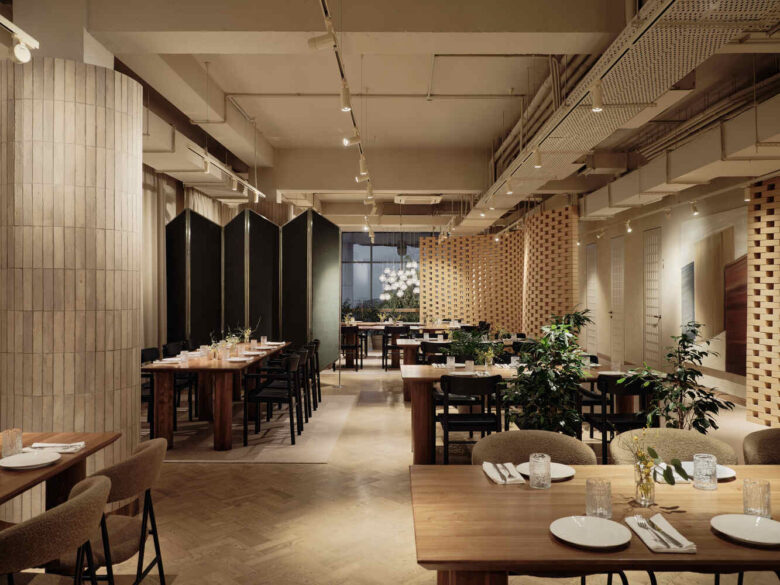
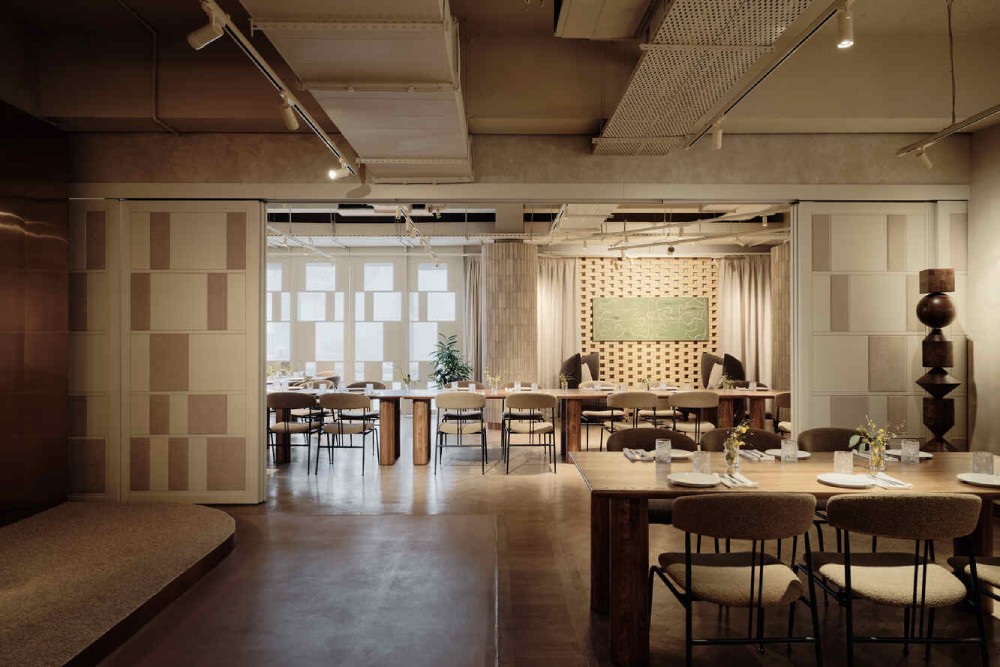
Located next to a mosque in Almaty, TAL has long been known as a place for family gatherings, memorial meals, and large communal dinners. The renovation sought to rethink the space without severing its connection to the past — preserving its familiar atmosphere while introducing a calmer, more contemporary, and architecturally cohesive identity. From the outset, the project aimed to avoid literal stylization or overtly decorative references to national motifs. Instead, the design is shaped through materials, light, proportions, and spatial rituals. The interior draws from the culture of shared dining and everyday family traditions, translating them into a contemporary architectural language.
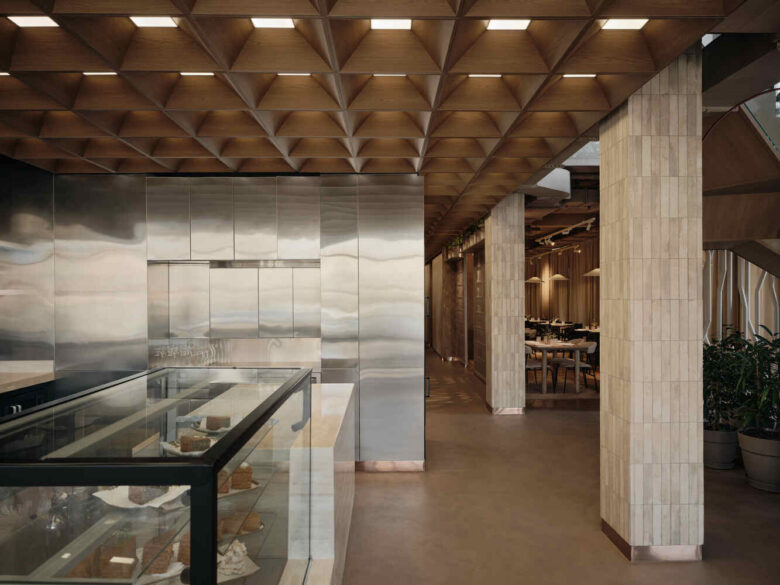
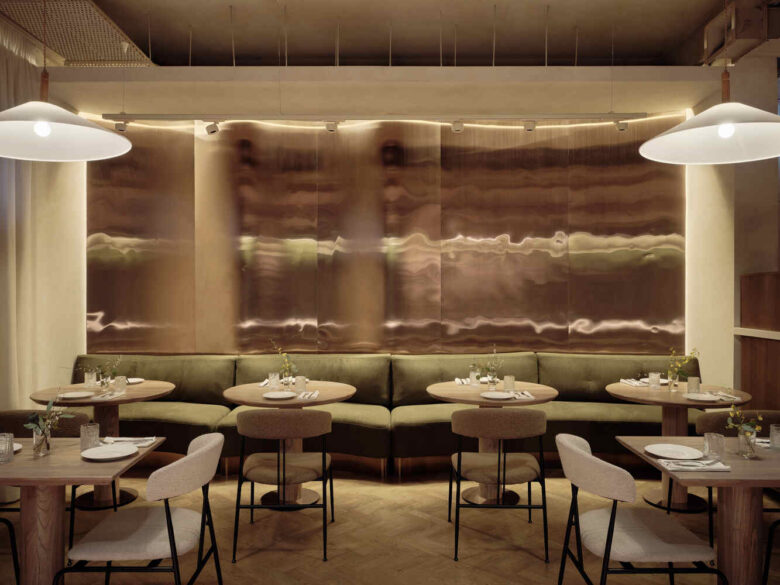
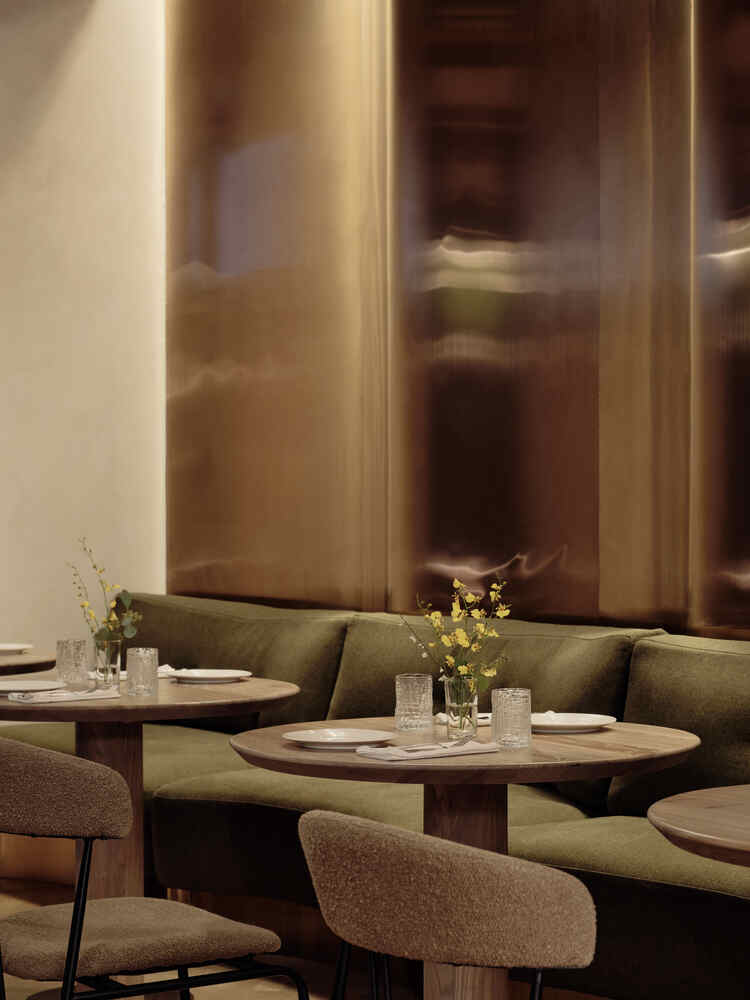
The restaurant is organized across two floors, each responding to a distinct social scenario. The ground floor functions as a more open and casual environment, combining a café area with smaller tables for everyday dining. The atmosphere here is quieter and more intimate, accommodating lunches, coffee meetings, and smaller family gatherings.
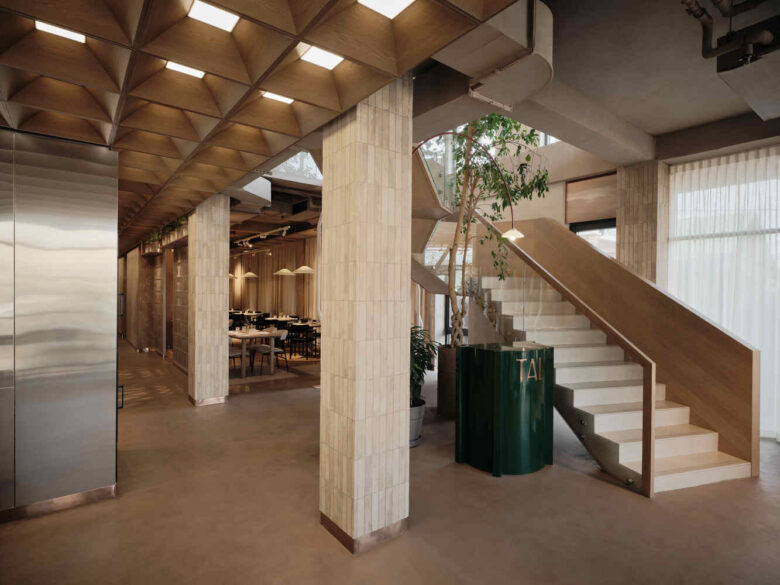
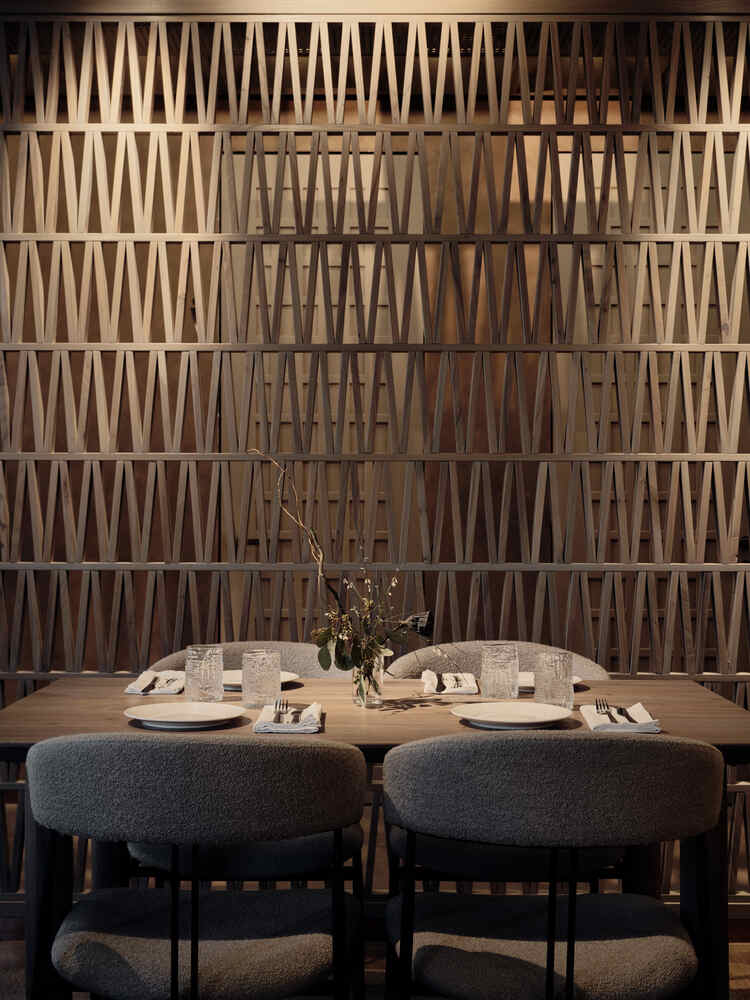
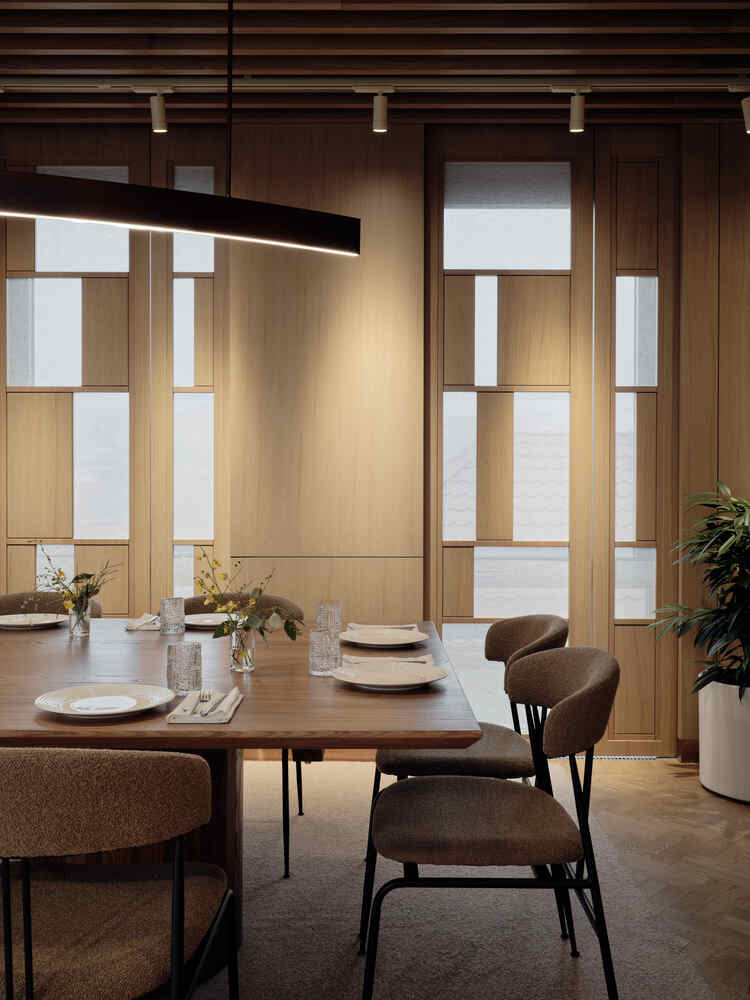
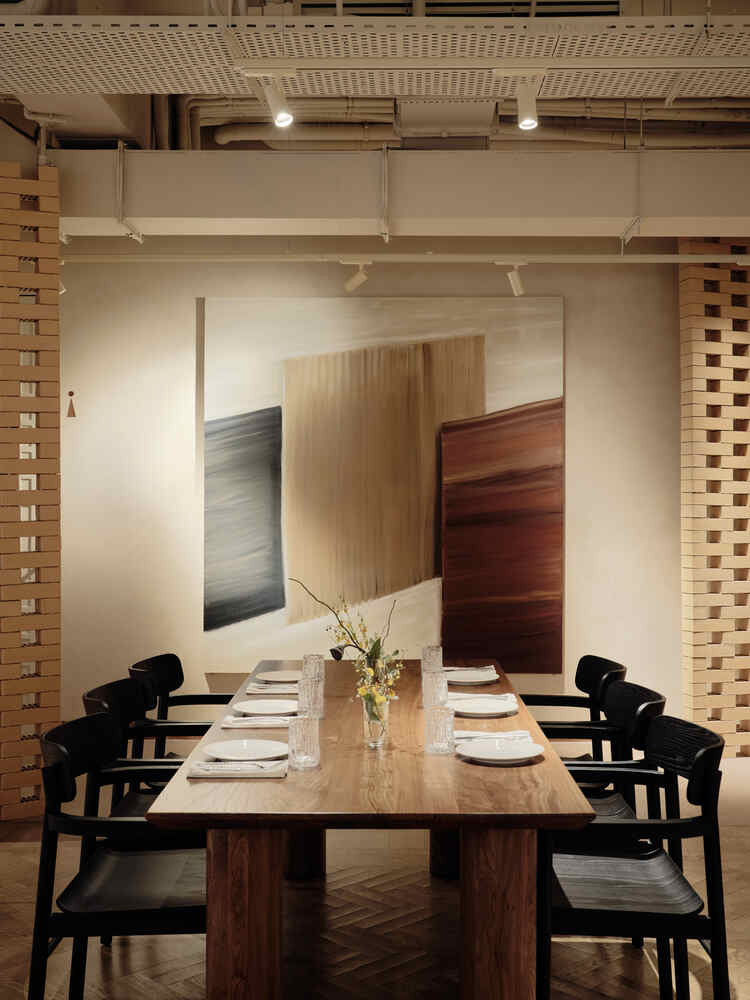
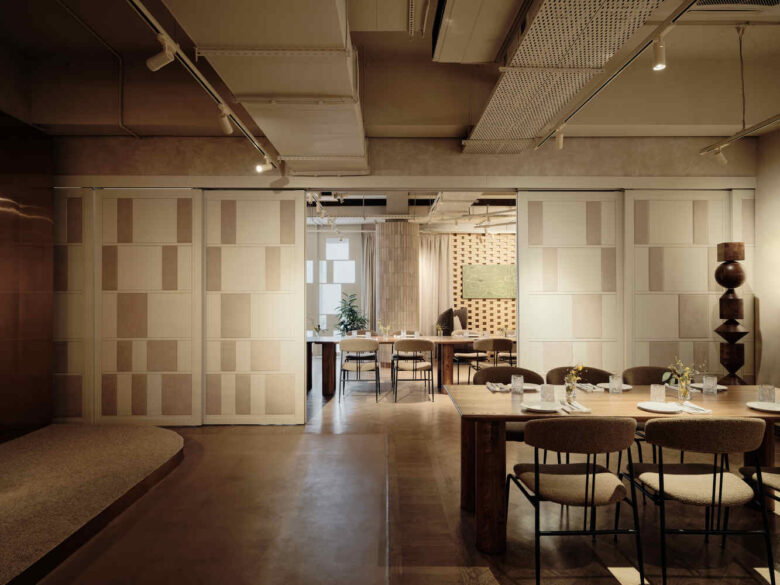
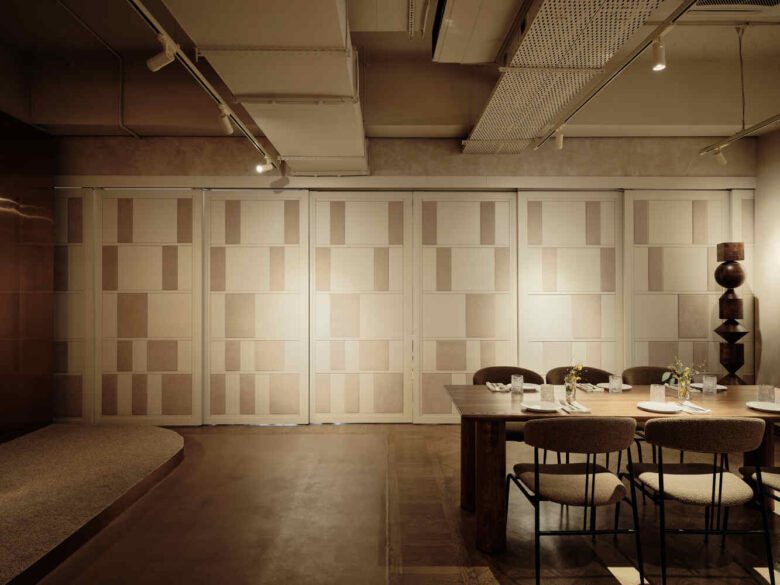
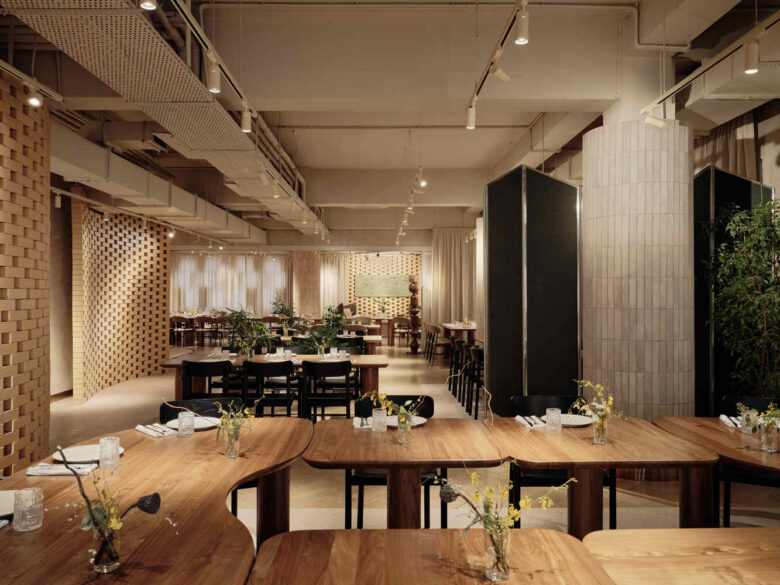
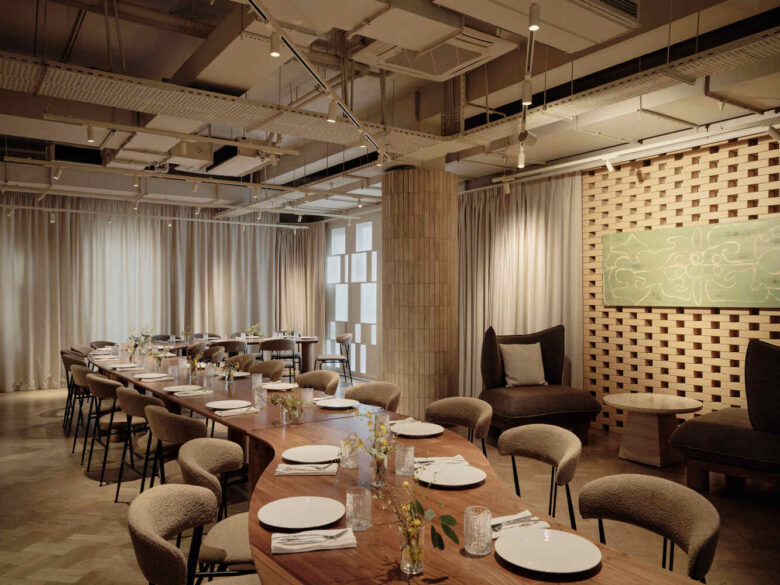
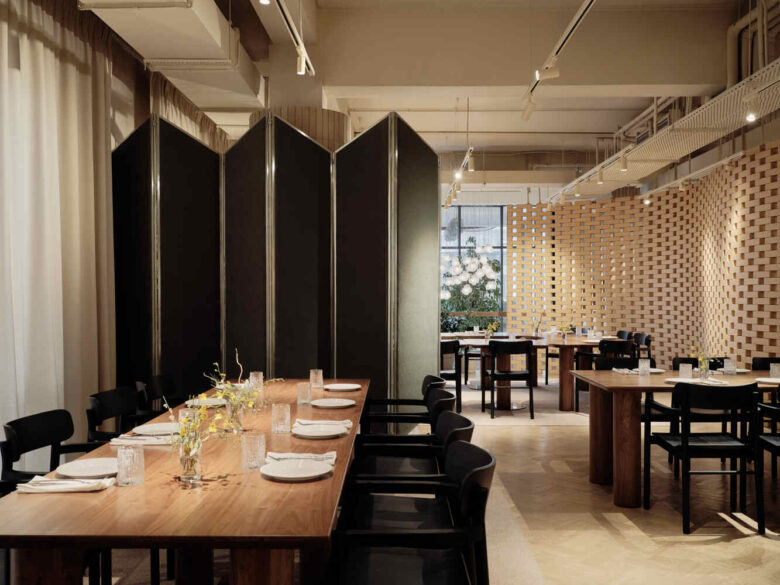
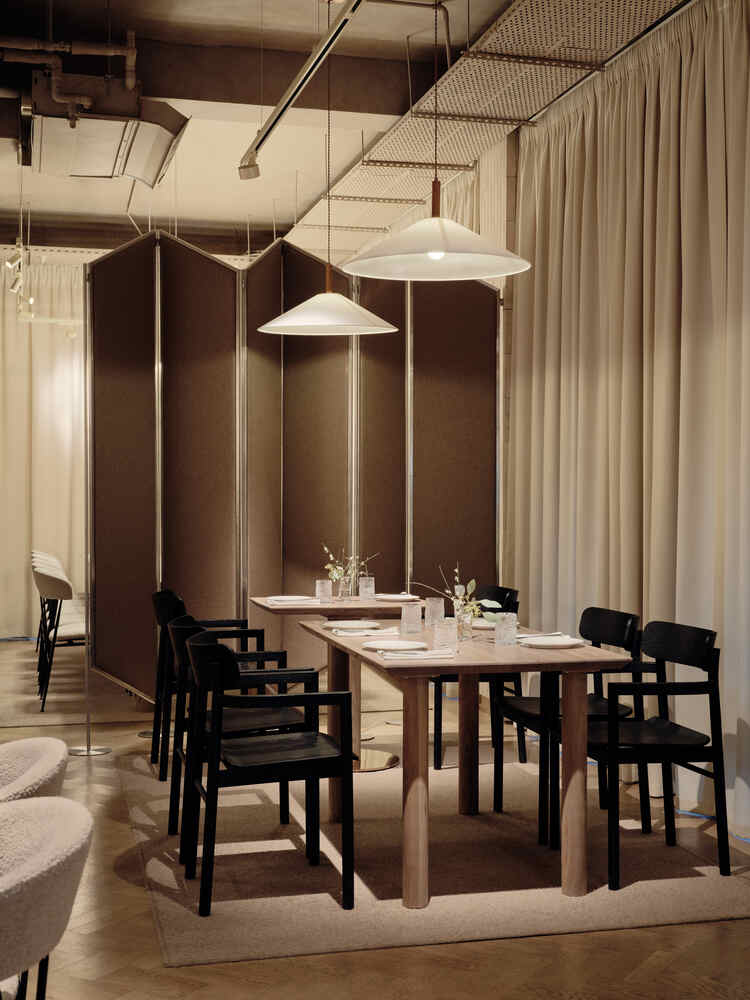
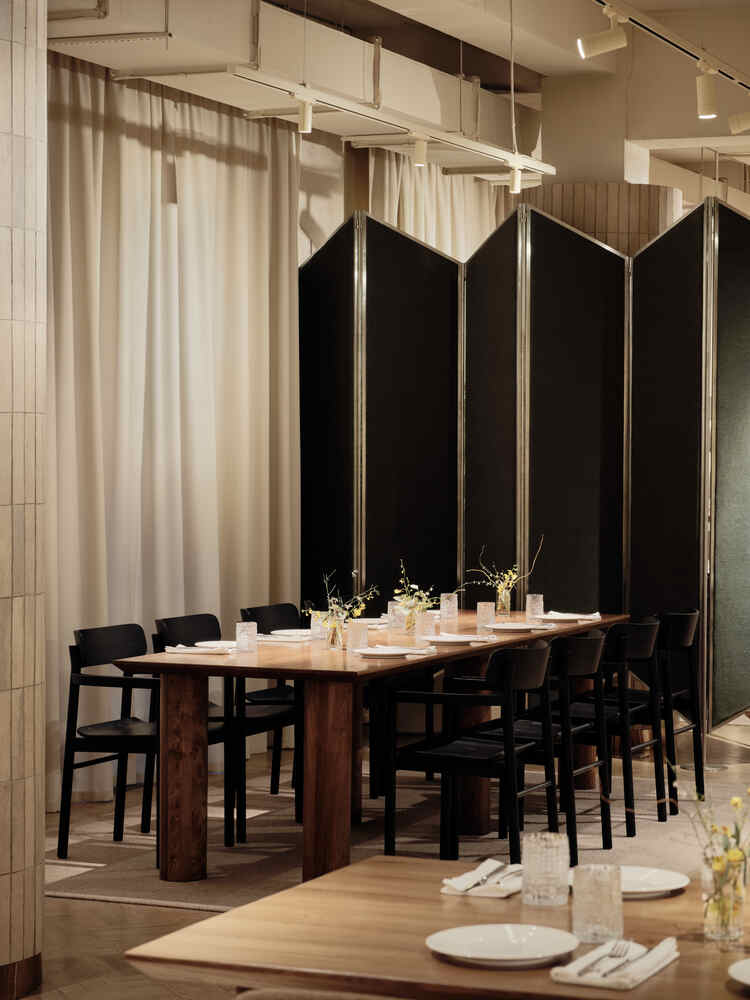
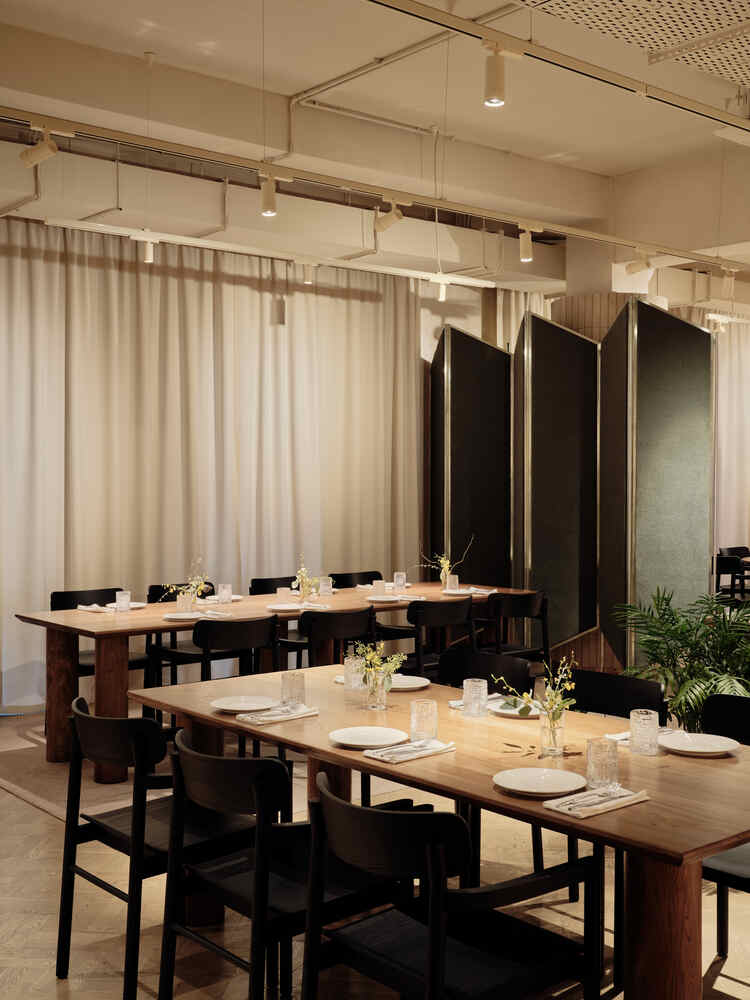
The upper floor is dedicated to larger communal events and extended family dinners. The space is structured around long tables that can be reconfigured and joined into one continuous surface. This became one of the central gestures of the project: an architecture that adapts itself to the rituals of collective dining, where continuity of conversation and the feeling of togetherness are essential. Throughout the renovation, several original elements of the building were preserved, including the parquet flooring and staircases. Rather than fully replacing the existing interior, the project sought to integrate new interventions into the existing structure, maintaining a sense of continuity and memory within the space.
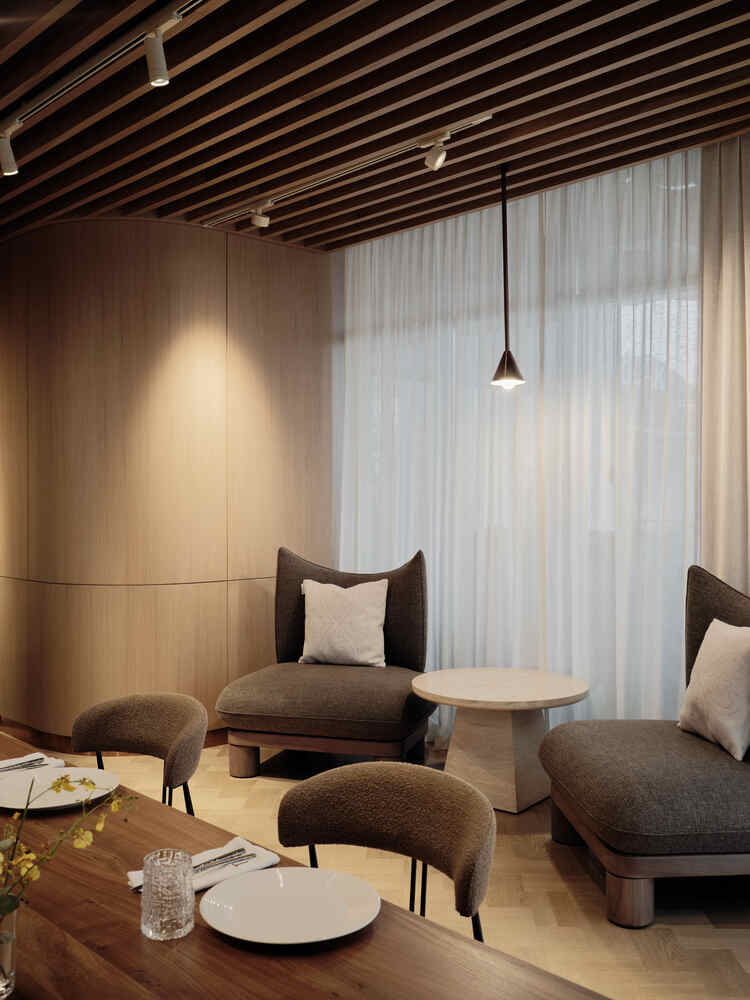
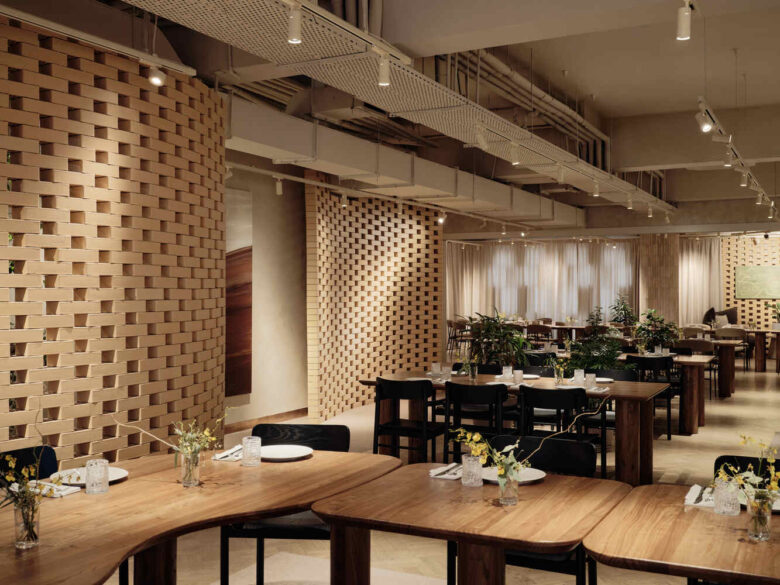
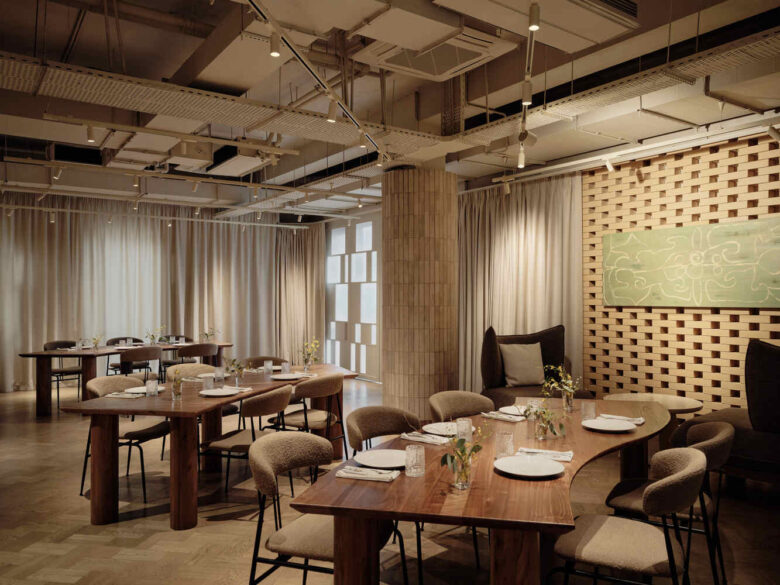
The material palette is built around warm sand tones, natural wood, brick, and soft-textured finishes. The interior avoids strong visual contrasts and decorative excess. Light plays a role almost equal to that of the materials themselves: diffused illumination filters through semi-transparent partitions, creating a calm and layered atmosphere throughout the restaurant.
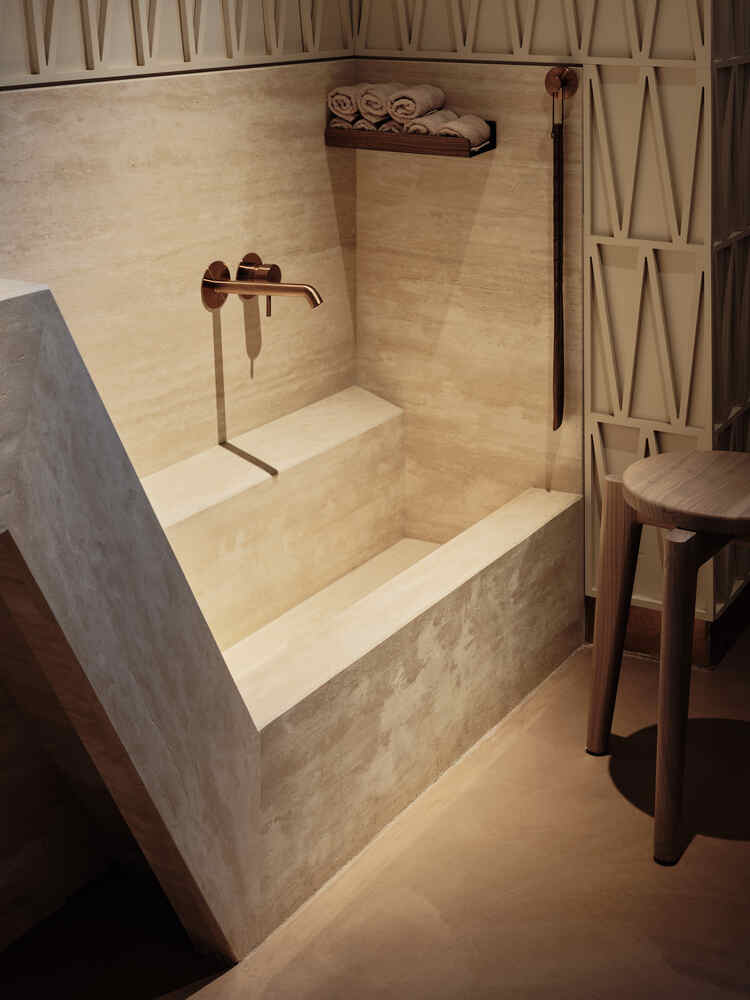
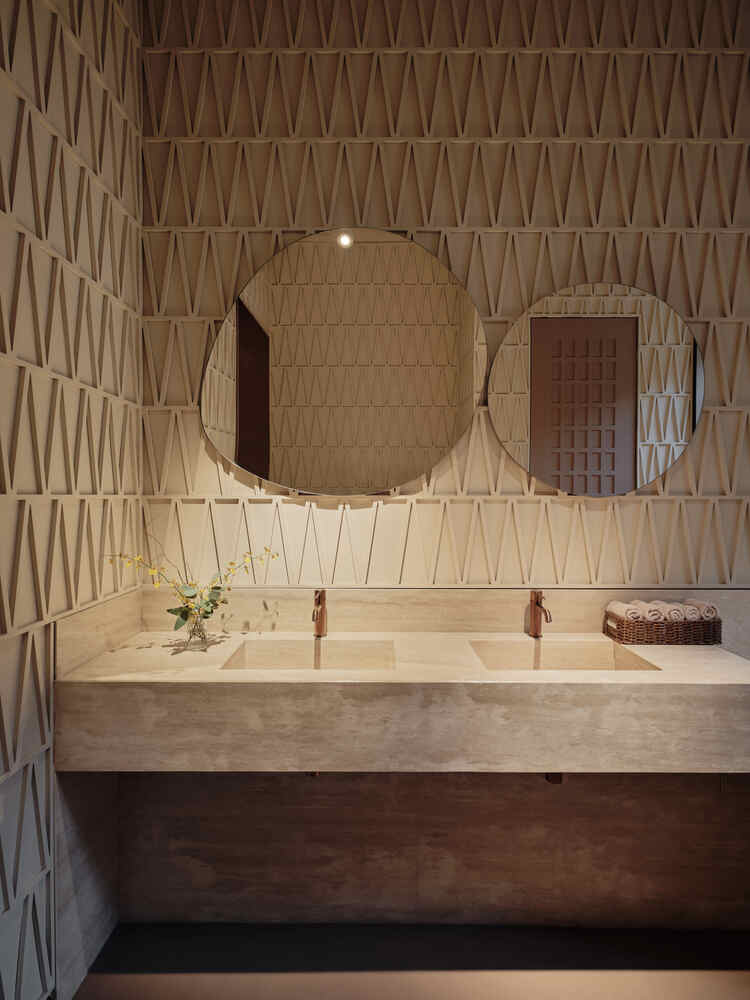
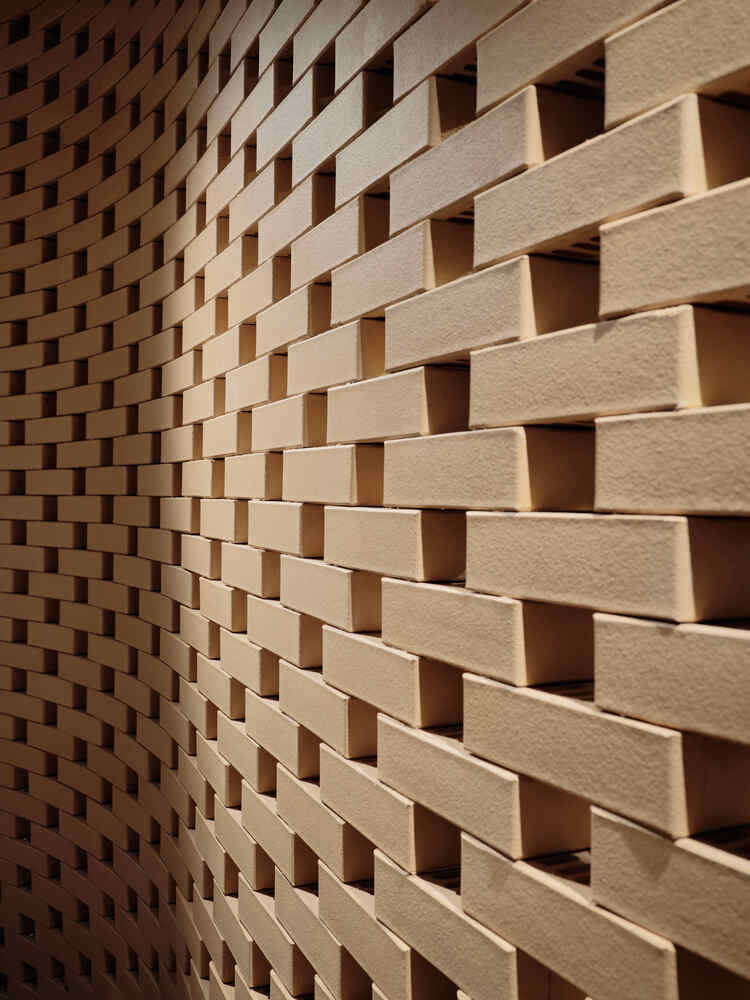
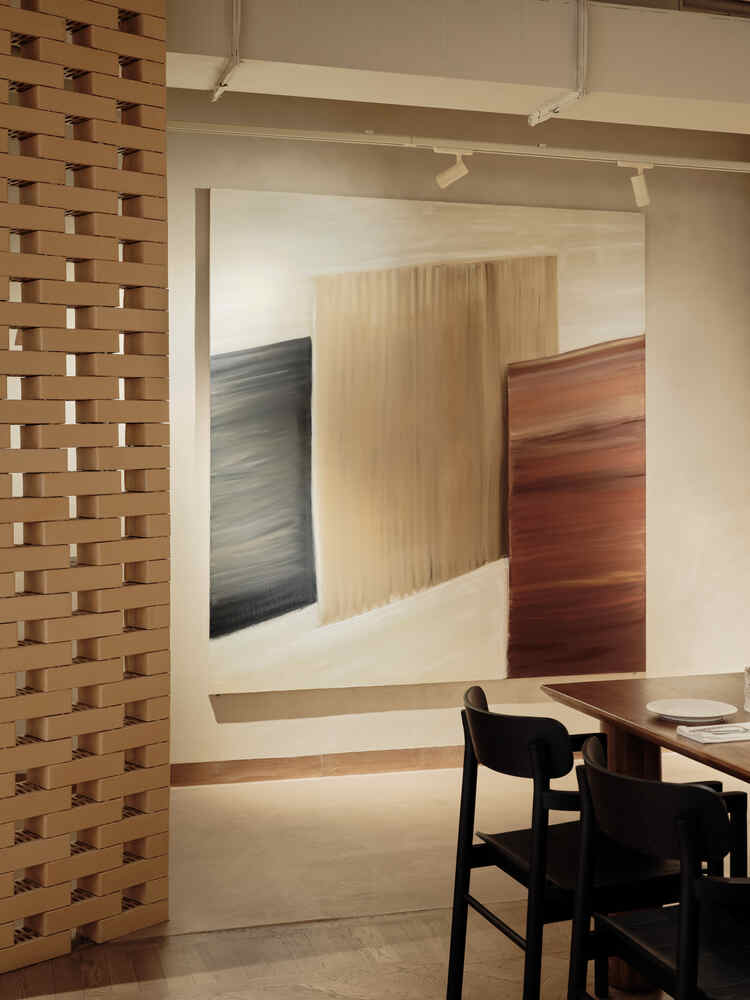
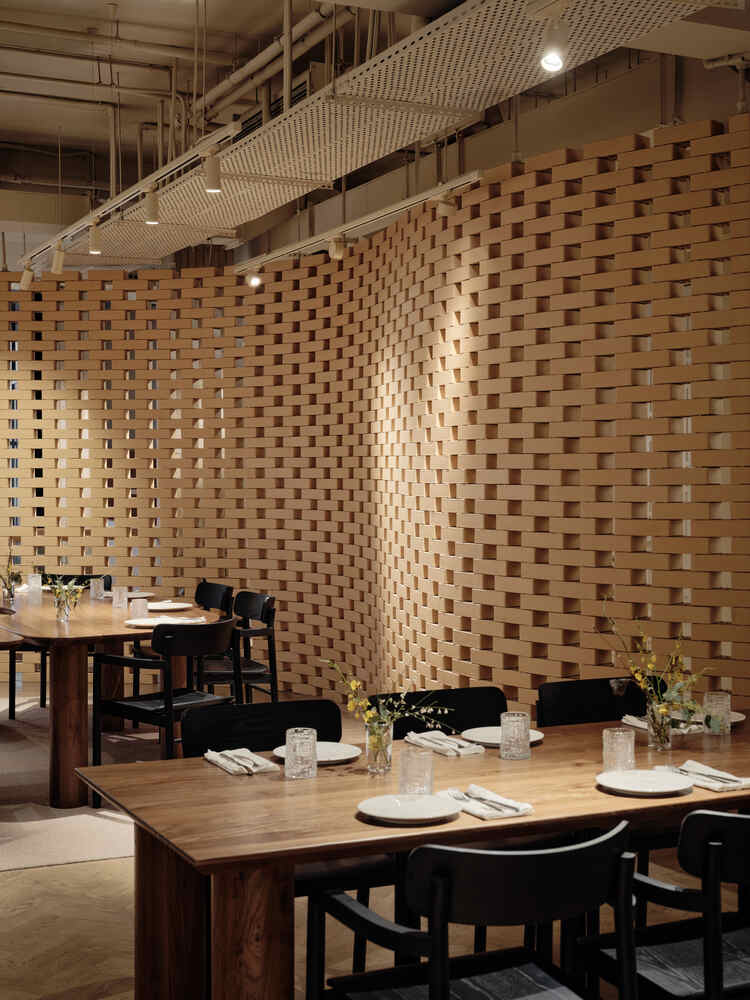
One of the defining architectural elements of the upper floor is a sculptural brick partition that simultaneously separates and connects the space. It creates shifting perspectives across the hall and breaks down the scale of the large dining area into more intimate spatial moments. Some furniture pieces were custom-designed for the project. Particular attention was given to the comfort of long family meals: generous table dimensions, comfortable seating, and carefully considered spacing between guests. Even the more utilitarian spaces were designed around the specific rituals of the restaurant, including ablution areas integrated into the washrooms.
The interior also features artworks by Assel Nussipkozhanova. Her abstract compositions, inspired by everyday domestic life and images rooted in Kazakh culture, are integrated into the architecture not as decorative additions but as part of the spatial atmosphere itself. TAL is an attempt to create a contemporary family restaurant without theatricality or direct cultural symbolism. The project relies instead on familiar rituals, tactile materials, and a sense of calm — a space where tradition continues to exist naturally within a modern urban setting.
Architects: NAAW
Lead Architects: Elvira Bakubayeva & Aisulu Uali
Design Team: Victoria Akram
Technical Team: Arailym Mukhmedjanova
Interior Design: Assel Nussipkozhanova
Photographs:Damir Otegen
Via