
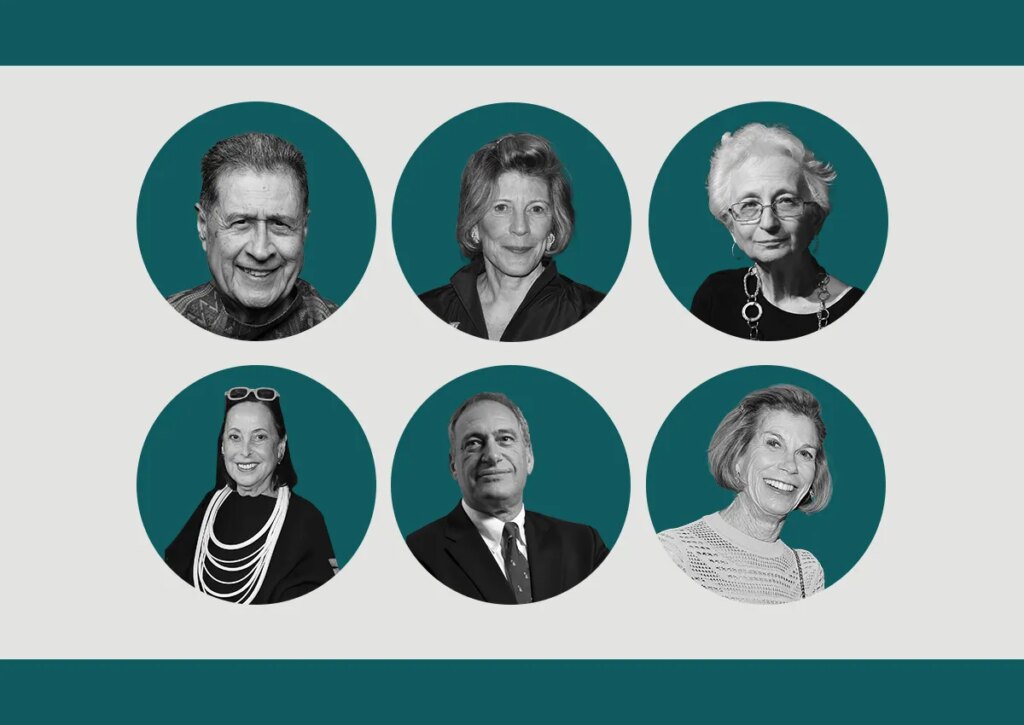

During the past 12 months, the art world lost some of its most dedicated collectors, who were known for the outsize holdings as well as their patronage of institutions, many of which benefited from their largess. Agnes Gund and Barbara Jakobsen were longtime trustees of the Museum of Modern Art in New York. Dorothy Vogel was a librarian whose holdings of postwar art transformed the National Gallery of Art in Washington, D.C. Susan Marx helped make the Aspen Art Museum what it is today. The Museum of Fine Arts, Boston would be 700 artworks less rich without the generosity of John P. Axelrod, and the Blanton Museum of Art can now tell a fuller story of Latinx art thanks to a donation of 5,000 works from Gilberto Cárdenas.
To hear more about the impact that these six collectors had on the institutions they supported and the people they met, ARTnews spoke with curators and fellow collectors about the times they spent together.
-
Nonie Gadsden on John P. Axelrod
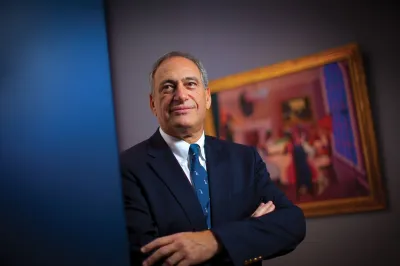
Image Credit: Photo Dina Rudick/The Boston Globe via Getty Images. John P. Axelrod, a lawyer who appeared on the Top 200 list between 1997 and 2000, focused on modernist art by Black and Latin American artists, as well as decorative arts. Much of his collection of Black art now resides with the Museum of Fine Arts Boston, whose holdings include more than 700 paintings, sculptures, and design objects that he donated. Nonie Gadsden, a curator in the museum’s decorative arts and sculpture department, recalls the Boston-based collector, who died in January.
I remember the first time I went to John’s apartment. It was a lesson and a test all at once. He would take you around, showing you everything and asking, “What is this? Why do you think this was made of aluminum?” You felt like you were constantly in school because you were learning and being challenged at the same time.
He had a gruff manner, but he loved to share his knowledge. He was so deeply informed about the art he collected that, while it might have been scary as a young curator to go over there and wonder whether you were prepared enough, you knew you were going to learn a tremendous amount. I quickly learned never to doubt John’s eye. He was the kind of collector who collected things long before others were interested in a particular field.
John started by collecting French Art Deco, then became interested in what the United States was doing during the same period—the 1920s and ’30s. He began collecting modern design as well as paintings and sculpture, and he quickly recognized that many of the best paintings and some of the most interesting sculpture being made in the ’20s and ’30s were by African American artists. He didn’t care who made them; he just knew they were good art. He said that no collection was complete without incorporating these works. He offered the collection as a partial gift and partial purchase to the Museum of Fine Arts in 2011. It’s an overused term, but, truly, it was transformational for the MFA’s collection. It took us from having a very small collection of work by Black artists of the early 20th century to having a very significant one.
He also collected Latin American art, and that went along with his strong interest in the ’20s and ’30s—what he called “between the wars.” He primarily collected Uruguayan and Argentine work from that era. He was doing a lot of business in Latin America at the time, working with American Airlines, and that’s when he began seeking out the equivalent work from that region. His partner of 44 years, Darwin Cordoba, is from Costa Rica, so there was that influence as well.
John was persistent. He loved detective work, and he loved a mystery. He would seek out dealers who knew the field and who were working in it. For the African American art collection, he worked closely with Michael Rosenfeld. For American modern design, he collected annual advertising books and trade catalogs from those years, memorized what he saw in them, and then went out looking for the objects. He was simply curious, and people loved his curiosity and were eager to help him learn.
—As told to Alex Greenberger
-
Simone Wicha on Gilberto Cárdenas
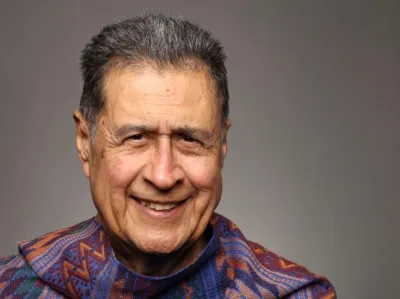
Image Credit: Courtesy Dolores Carrillo García Gilberto Cárdenas, who died this past July, was among the most important collectors of Latinx art in the US. A “true believer collector,” as this magazine put it in a 2024 feature, Cárdenas and his wife, Dolores Carrillo García, amassed some 20,000 objects over several decades, with works by artists like Yolanda M. López, Malaquías Montoya, Carmen Lomas Garza, Ester Hernandez, Delilah Montoya, and John M. Valadez. Among his passions were collecting prints and photography, and eschewing the traditional hierarchies between mediums. A sociologist and leading scholar on Latino studies, Cárdenas donated more than 5,000 works in 2023 to the Blanton Museum of Art at the University of Texas, Austin, where he once taught. Simone Wicha, the director of the Blanton, remembers Cárdenas.
Gil filled a room with joy and inspired you to think and look. He was just a real champion of artists. He had this sense of extraordinary curiosity and extraordinary love for artists and the important stories they tell. He walked through life in a very graceful way, while also being very kind, funny, and warm. He was really astute about the world around us and a committed learner, both for his collecting and as a researcher, sociologist, and professor.
I met Gil many years ago, but I feel like I got to know him around “Arte Sin Fronteras,” the exhibition we did in 2019 that celebrated a group of prints from Self Help Graphics and Art that he had collected and had gifted to the museum. That exhibition began an in-depth conversation with him about his collection beyond what was presented in that exhibition. He invited me over to his house, and his home was just filled with art, from floor to ceiling. He had a room dedicated to an extraordinary archive; he kept everything. There was a deep history there. He was one of the most serious collectors in terms of thinking in-depth about the larger legacies of artists that he felt were important.
One of the questions that came about was, if the collection came to the Blanton, what that might look like for us. One of the ideas I proposed to him was that the collection, which was extensive, needed to have curatorial research—and what if the museum took on that role. During digging and recording everything in the collection, we would identify what works would make most sense to keep to comprehensively tell that story. I also proposed that we could support transferring some works to other museums around the country. We’ve given ourselves until 2028 to finalize what stays at the museum and what gets transferred out. It was a lengthy conversation between him and his wife, Dolores—lots of meetings, coffees, visits to the house. My sense was that he had comfort in knowing that the collection was going to be studied, documented, put online, and exhibited—and then ultimately shared with other museums.
Around that time, he joined the Blanton’s leadership board and became even more involved. He was an active member in every meeting, and it wasn’t just about his collection—he was very committed. He respected the work we were doing, both in our commitment to scholarship and research and our connection to community, especially to students on campus. The gift has added to what the museum had already been building in terms of Latino art, and adds to our strengths in Latin American art and American art as a whole. It also allows us to tell a more robust story about a very important part of the American experience. It’s changed our ability to have a gallery that is focused on telling the Latino story through Gil’s collection. There have been other collectors who have reached out to understand how they can help us.
—As told to Maximilíano Durón
-
Sarah Arison on Agnes Gund
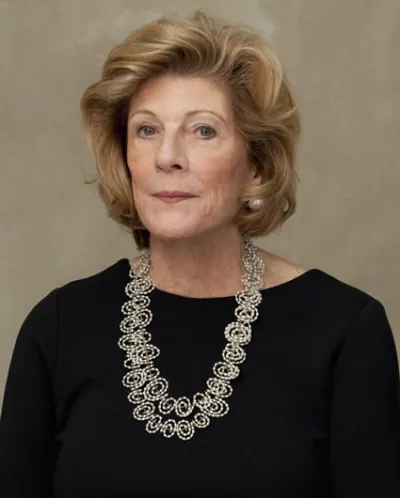
Image Credit: ©2013 Timothy Greenfield-Sanders Through her leadership as president of the Museum of Modern Art in New York and later chair of MoMA PS1, Agnes Gund, who died in September 2025, established herself as one of the most influential and beloved collectors and patrons the art world has ever seen. Over her almost six-decade relationship with MoMA, she donated more than 1,000 artworks, supported the acquisition of hundreds more, oversaw an $858 million expansion that opened in 2024, and negotiated the merger with PS1. Beyond MoMA, she founded Studio in a School in 1977 to support art education in public schools, and sold her beloved Roy Lichtenstein painting, Masterpiece (1962), for $165 million—and used $100 million of that to launch the Art for Justice Fund for criminal justice reform. Appearing on each edition of the Top 200 list between 1990 and 2018, her collection also included major works by Mark Rothko, Cy Twombly, Jasper Johns, Robert Rauschenberg, and Willem de Kooning, among many others. Sarah Arison, who has followed in Gund’s footsteps first as chair of MoMA PS1 and currently as president of MoMA, remembers her friend and mentor, “Aggie.”
I met Aggie when I was around 18 years old; she and my grandmother were close, so she was like another grandmother to me. My grandmother and Aggie were kindred spirits in their deep care for artists. Because of them, that’s how I’ve approached my life and my work, focusing on artists and making sure they’re supported in every way possible. I don’t think there is an artist who met Aggie who would not say that she changed their life.
For her, collecting was less about the objects and more about the artists behind them. It goes without saying, she had the greatest eye: She had the greatest pieces by the greatest artists. Her deep care for people is what drove her. You saw that in the many incredibly close relationships she had with many artists. She was just so beloved by the entire community. One thing I learned from Aggie is to not sell anything from a living artist—because the secondary market doesn’t serve them—and to make sure it’s about the person, not the object.
One memory I have, which is just so Aggie, is she would say, even until she passed, “Well, I haven’t done enough.” If you look at everything she’s done, that’s insane. She approached her life by always looking for ways to help. That’s how the Art for Justice Fund came about. She saw a problem with mass incarceration, and she said, “I have to do something to help to try to solve this—to try to fix this in whatever way I can.”
Studio in a School is another example. She saw a problem—that the arts were not available to the vast majority of schoolchildren—and she set about to change that. Going to Christie’s for its end-of-year show and seeing young people standing in front of their work so proudly with their families around them, you saw the impact of that organization. That was her baby. More than 1.2 million students have gone through Studio in a School, and it’s coming up on its 50th anniversary [in 2027]. And she would still say, “I haven’t done enough.”
Her level of engagement with MoMA was incredibly deep. She would walk through the museum and greet everybody—every security guard, every visitor engagement worker—by name. She was so present and so involved. Being present and accessible to the staff and board at all times is something that was important to her, and I definitely learned from that example and applied it when I took over from her as chair of MoMA PS1 in 2020 and now as president of MoMA. Watching her both with MoMA and MoMA PS1, I learned the importance of the incredibly symbiotic relationship those two institutions have. She was the biggest champion of MoMA PS1, and made that institution what it is, which is also in line with her thinking because PS1 is so artist-centric and gives artists opportunities to experiment and create. Learning from her, both at PS1 and at MoMA, definitely impacted me. Without her, there is a void felt by so many. To that, I say, “We all just have to work to continue her incredible legacy.”
—As told to Maximilíano Durón
-
Alice M. Tisch on Barbara Jakobsen
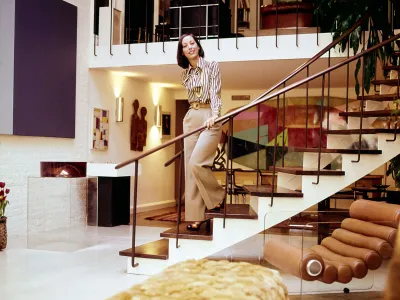
Image Credit: Photo Horst P. Horst/Conde Nast via Getty Images Barbara Jakobsen, who died in September 2025, was an influential collector and patron for more than six decades—an “art world power broker,” as The New York Times put it in her obituary. She is best known for her longstanding support of the Museum of Modern Art, where she first joined its Junior Council before becoming a trustee in 1974. Appearing on the 1990–92 editions of Top 200, Jakobsen once described her collecting as “a form of autobiography, as evidence of the fact that I lived for most of the last century and then into the new century.” Her holdings included works by Josef Albers, Jasper Johns, Cy Twombly, Frank Stella, Robert Morris, Donald Judd, Dan Flavin, Robert Mapplethorpe, Diane Arbus, Andy Warhol, and Jeff Koons—many of whom she counted as close friends. (Works from her collection came to auction twice at Christie’s, once in 2005 and then posthumously in 2026.) Alice M. Tisch, a MoMA trustee since 2012, remembers her friend and colleague.
Barbara was really special. I met her when I joined the MoMA board, and we just got along right away. I also joined the Committee on Architecture and Design, where she had a lot of influence. She had a huge amount of knowledge, wisdom, and experience, and brought a lot to that conversation. I was lucky because we shared that interest. We lived three blocks from each other, and we started to extend our conversations because we would walk home from the board meetings together—that’s how we really got to know each other. Her [Upper East Side] townhouse was the home of a true collector. She collected art by friends and by those whom she admired, and she didn’t collect to impress anyone other than herself. For her, art and architecture were the priorities of life. If you don’t have that in your life, what were you doing?
She grew up on Eastern Parkway in Brooklyn, across from the Brooklyn Museum. That’s where her love of art and architecture began. Then she studied art history at Smith College. She was a great conversationalist and was so eloquent. She knew everybody, and she had known everybody—she had all the greatest stories. She was very good friends early on with Leo Castelli and Ileana Sonnabend. I remember her telling me about going to Leo’s first Jasper Johns show [in 1958], buying a painting on credit, and later taking it home on the top of the car. She loved Minimalism. But above all, she loved artists, so she was always moving on to something new.
She joined the Junior Council at MoMA [around 1961], and she was a dynamo from the start. She got to know the trustees and the employees because she approached it as if she were working at the museum. She was very modern in her thinking. I think the Museum of Modern Art has always drawn people who are modern-minded and want to live in a modern world, like Barbara. Barbara was a breath of fresh air in a world where so many people try to be the same. She never tried to be anything, and she couldn’t help but be different.
—As told to Maximilíano Durón
-
Heidi Zuckerman on Susan Marx
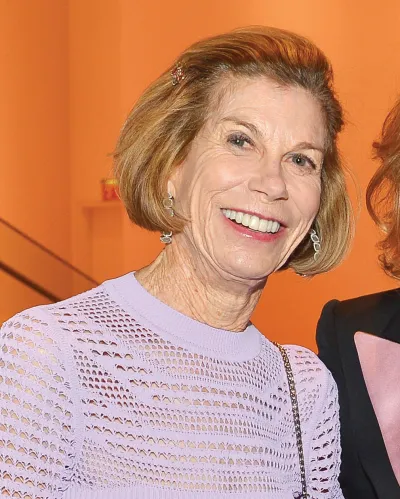
Image Credit: Donato Sardella/Getty Images for Hammer Museum Susan Marx, who passed away in November 2025, was a fixture of the art communities in Los Angeles and Aspen, Colorado, where she and her husband, Larry, had homes. Together, they started collecting in the 1960s, and they appeared on the Top 200 list each year from 2009 to 2025. Their holdings ranged from Abstract Expressionist masterpieces to cutting-edge contemporary works. A past board chair of the Aspen Art Museum, Susan was among the institution’s most longstanding patrons. Heidi Zuckerman, founder of About Art and director of the Aspen Art Museum from 2005 to 2019, remembers Marx.
I met Susan shortly after I was contacted about considering the job as director of the Aspen Art Museum. I was working at the Berkeley Art Museum at the time, and she flew up from Los Angeles so we could have lunch together. We both ordered escargot, and we were fast friends from there. We connected because she was moved by how I spoke about the transcendent possibilities of art. She really believed that art could bring people together in a civil way—that was a shared belief that we uncovered over that first lunch and a guiding connection throughout our entire collaborative friendship.
When I was hired, Susan was the immediate past board chair of the Aspen Art Museum, but she was still very involved. Nancy Magoon, her longtime best friend, was chair; Susan and Nancy were responsible for working with me to make the museum what it became. Susan loved the museum; she was probably its biggest cheerleader for the longest period of time. She was board chair at a time when it wasn’t a desirable job, and she would joke that she was the only one willing to do it. But her willingness to step in and take on a leadership role of an institution that hadn’t yet become something dynamic, exciting, and world-class is a real indicator of her values and commitment to art and the power it could have in changing lives and impacting a community. Susan volunteered at the hospital for many years. That interest in helping people and healing was one thing that brought her to art.
Susan was one of the most charming people. She had a very youthful energy about her and a very energizing smile. Susan was also a really gracious host, and she loved to entertain. She and Larry opened their home up for so many artist dinners—they always said yes to any ask to host artists in their home and bring people together. They lived with their art in a way that was very unique and almost folksy, a kind of throwback to how Susan was raised. She referred to herself as a farmer’s daughter; she grew up outside of Fresno. Larry grew up in New York, and they met at Stanford.
With Larry, Susan was a voracious collector. They both loved art. They collected a lot of drawings initially because they liked the immediacy of the artist’s hand and being able to feel the presence of the artist in a drawing. I called their dining room “the de Kooning Dining Room” because the entire room, and other parts of the house, are filled with [Willem] de Kooning works, from his early to late works. Their Aspen home is focused primarily on Abstract Expressionism and the New York School. Their LA home was more focused on California Light and Space artists and Conceptual art. They became involved with the Hammer Museum [in LA] and the Aspen Art Museum because they believed in the idea of giving back and being good stewards of the communities they lived in.
—As told to Maximilíano Durón
-
Molly Donovan on Dorothy Vogel
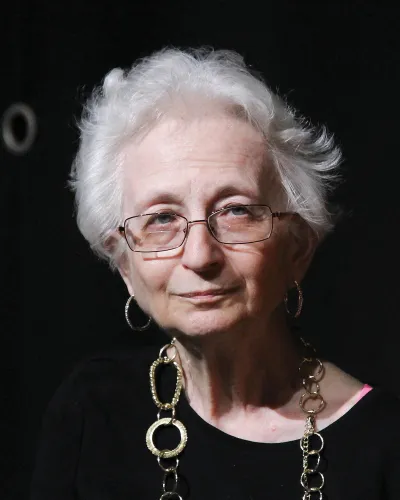
Image Credit: Photo Rob Kim/Getty Images Dorothy Vogel, who died in November 2025, was known for assembling, with her husband Herbert, one of the country’s most important collections of postwar and contemporary art with modest means. Appearing on Top 200 from 1990 to 2000, Dorothy was a librarian and Herbert a postal worker, but they crammed their New York apartment with some 4,000 works by the likes of Sol LeWitt, Donald Judd, Roy Lichtenstein, Richard Tuttle, Cindy Sherman, Lorna Simpson, and others. They began donating their holdings to the National Gallery of Art in Washington, D.C., in 1992, giving 1,110 objects to the institution. In 2008, they partnered with the museum to donate another 2,500 works to 50 museums, one in each state. Molly Donovan, acting head of modern and contemporary art at the National Gallery, remembers Vogel.
I met Dorothy and Herbert Vogel in 1993 when I was hired as a research associate to work on their first exhibition at the National Gallery, which occurred in 1994 before it traveled. They were so kind and passionate, unwaveringly so—that’s what I remember. They were always excited to talk about the art and the artists, who arguably were as important as the works themselves, in their collection. They really cared for the artists to a high degree and valued those relationships always. We have a lot of depth with the artists that they collected, like Christo and Jeanne-Claude; I did a show on them drawing from the Vogel collection. Their passions knew no bounds. They were acquisitive. After works from their collection came to the National Gallery, they continued to collect in earnest, until Herb’s passing in 2012. They were actively collecting, and they basically just filled the apartment back up.
Herb was a deep looker, and Dorothy was the deep thinker. I think they had a very intuitive, uncanny sense about what many would consider very arcane work. As a former librarian, Dorothy was a talented record-keeper, and she really tracked everything, all the details and the information about each work. That gave us so much to go on when the collection came in. She had these meticulous sheets and notebooks. She was the best list-maker I ever met, and she kept things moving forward. She was incredibly organized. In the early ’90s, all my early interactions with Dorothy were by fax, and then we get to email, and she was off and running. She learned any tool she could.
When their collection came to the museum, I remember that the works challenged our own systems. The hallmarks of their collection were Conceptual, Minimal, and Post-Minimal art. One example came when I was cataloging Lawrence Weiner’s language-based works, specifically when it came to the medium lines. Lawrence Weiner’s medium line famously is “LANGUAGE + THE MATERIALS REFERRED TO,” which was completely unconventional at the time. I had to argue the point with my colleagues to honor his wishes to have that as the medium line. That was one of those situations where the art pushed the institution. It was formative, and their collection changed the DNA of the National Gallery in many respects.
Their generosity just had a ripple effect. They weren’t trustees; they were really their own category of donor. They loved the idea that the National Gallery was free and open to anyone. That really made a difference to them as lifelong civil servants. We were a perfect fit for them because of our focus on service to the nation—they believed in that. They came every six months to the National Gallery, and they likened it to visiting their children. They were remarkable, and they enabled us to celebrate our common and extraordinary humanity. Thinking about that example is so powerful.
—As told to Maximilíano Durón