
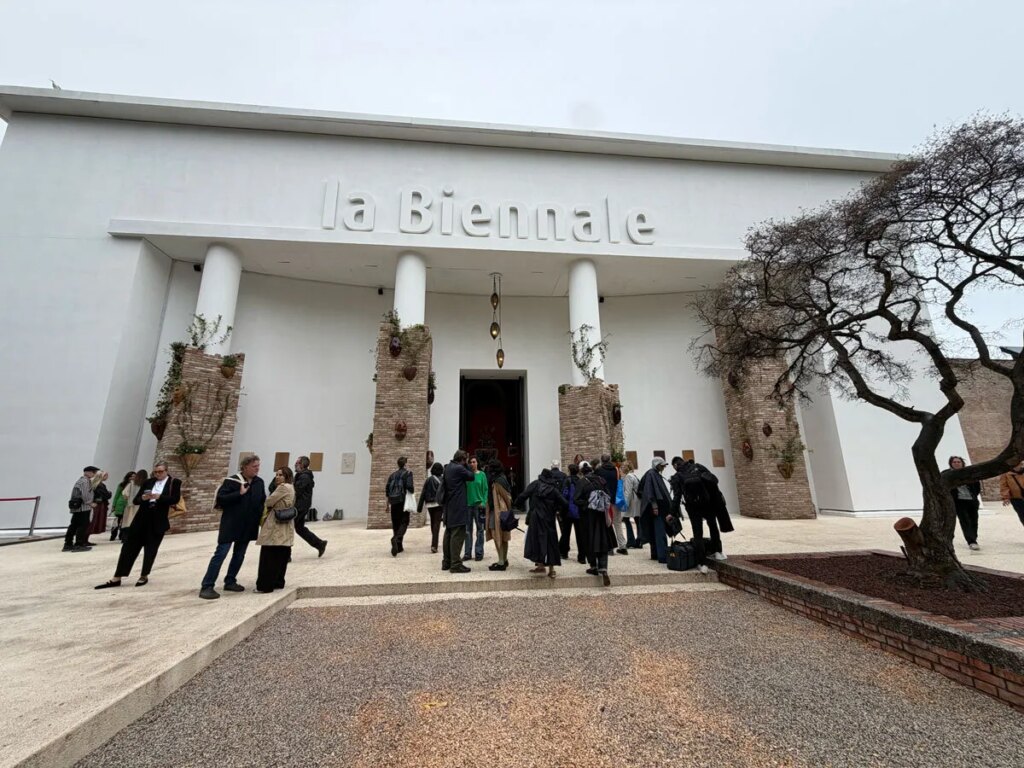
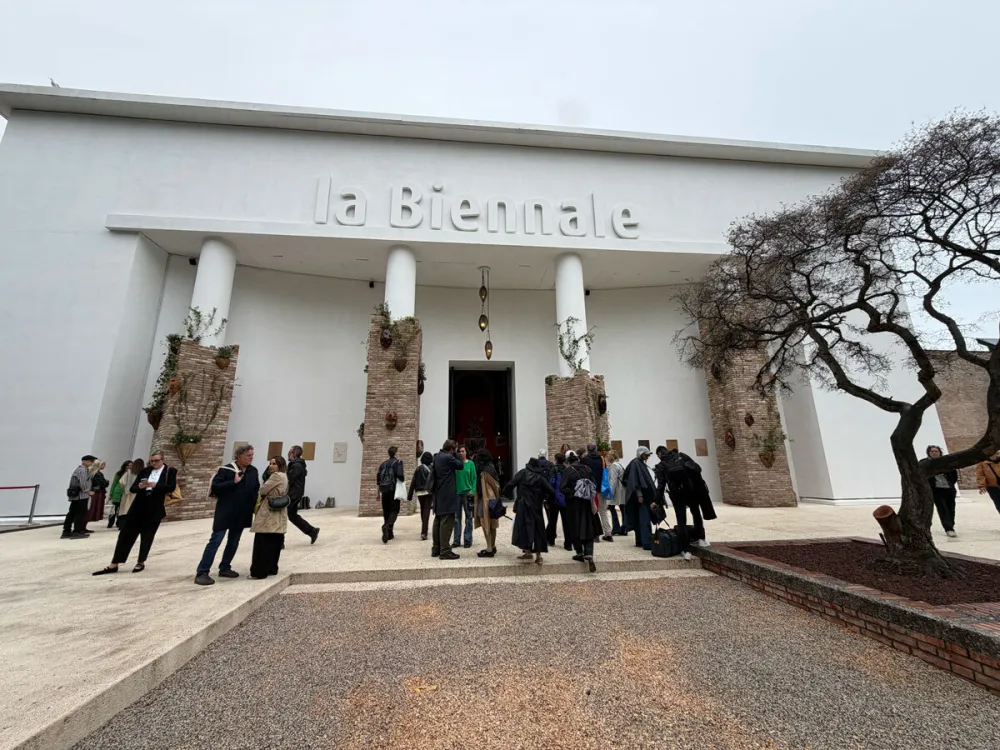
Over the weekend, a European Union commission followed up on its earlier threats to cancel a €2 million grant to the Venice Biennale, citing Russia’s participation in the event this year as its reasoning.
The European Commission was among the most high-profile voices to denounce the Biennale in advance of the opening, saying that the exhibition should never have let Russia back into the show. Russia had not staged a pavilion at the Venice Biennale since 2022, the year that the country invaded Ukraine.
Related Articles
European Commission Recommends Withdrawal of Venice Biennale Grant, UNESCO Reviews ‘Black Cube’ in Florence, and More: Morning Links for July 13, 2026
The Venice Biennale’s Record African Participation Comes With Caveats
During the Biennale, the pavilion faced protests from such groups as the Russian collective Pussy Riot. Before the Biennale, a wide array of politicians had likewise denounced the pavilion, whose organizers said they would close their exhibition shortly after the Biennale’s opening.
The Biennale claimed it could not kick Russia out of the festival, claiming that doing so would be a form of censorship. The reasoning appeared to conflict with prior statements from 2022, when the Biennale issued words of support for Ukraine after Russia’s artist representatives withdrew in protest of the war being led by their nation.
“Culture in Europe—funded with taxpayers money—should promote and safeguard democratic values,” wrote Henna Virkkunen, a leader of the European Commission, in a statement posted to X on July 11. “These values are not respected in today’s Russia.”
Some were unhappy with the position taken by the Brussels-based European Commission. Lega Nord, a right-wing Italian political party said in a statement, “The Biennale is history, culture, art, innovation and freedom. If some Brussels bureaucrat fails to understand that, we will live with it. Culture does not bow to Brussels diktats.”
The Kremlin likewise denounced the European Commission, telling the state-run TASS news agency, “As regards the Venice Biennale, I can only express regret over ongoing attempts to cancel our culture in other countries.”
A Biennale spokesperson said the exhibition had been informed of the European Commission’s decision by X. In that statement, the Biennale said that it had responded to the European Commission and that the exhibition “is now awaiting a formal technical communication from the Agency in order to assess any possible subsequent steps and to assert its position before all the appropriate competent bodies.
“The programmes concerned will continue as planned, as they are only marginally co-financed through the above-mentioned contribution,” the Biennale statement continued.
Update, 7/13/26, 12:30 p.m.: This article has been updated with a statement from the Biennale.