
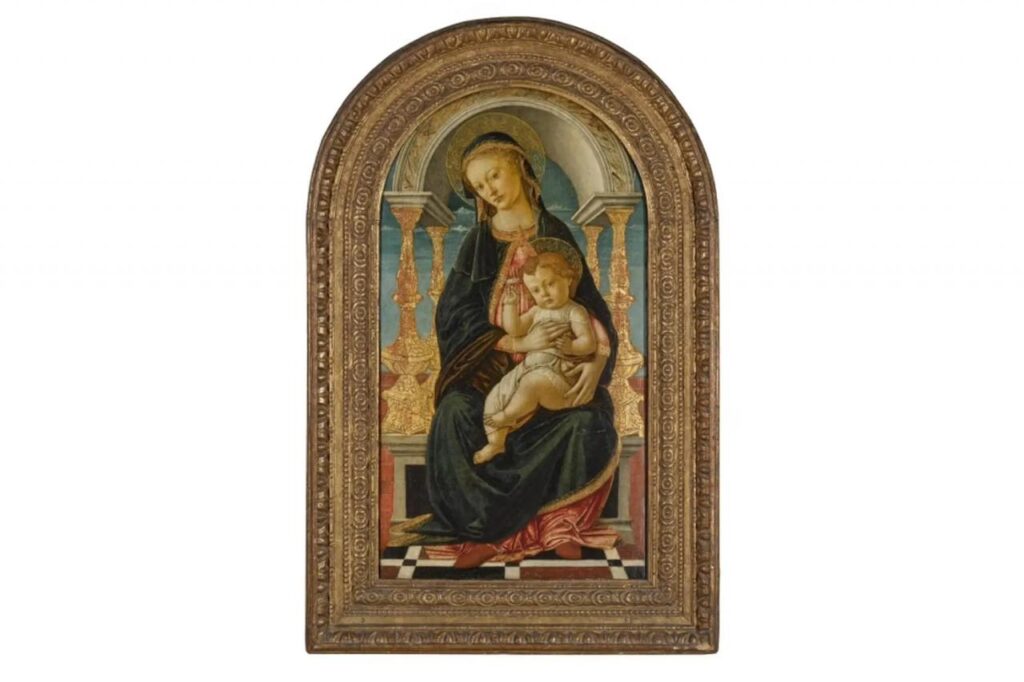
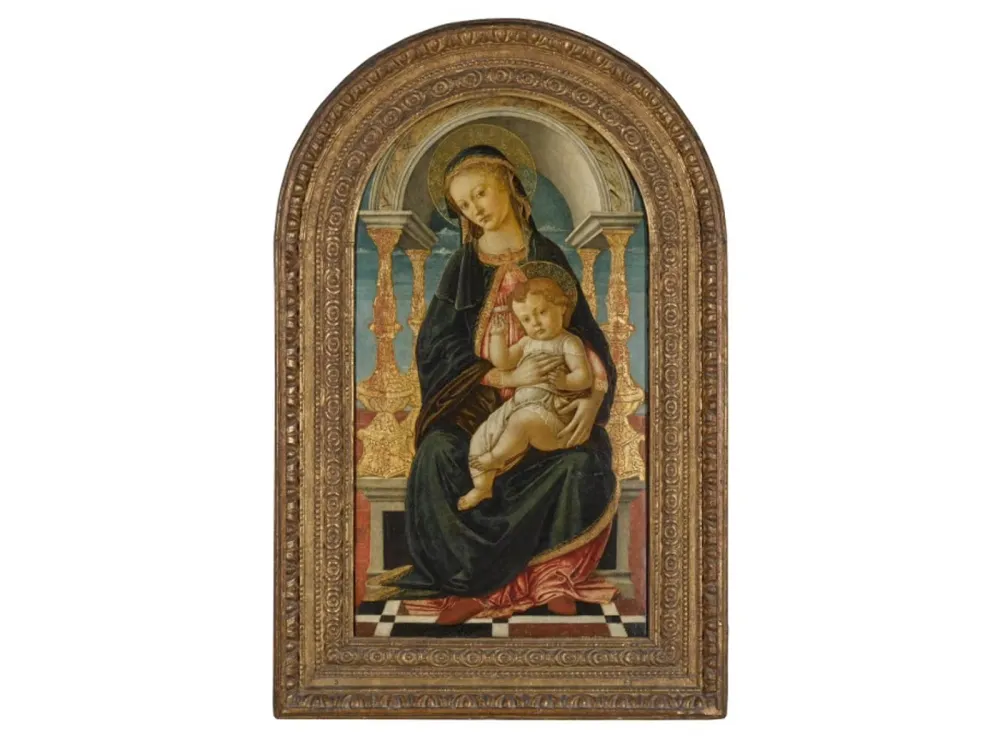
A Botticelli painting placed under an export ban in an effort to keep it in the UK was acquired by the Klesch Collection and will stay in England by way of a three-year loan to the Ashmolean Museum at the University of Oxford.
As reported by The Art Newspaper, the work—titled The Virgin and Child Enthroned and dated to the 1470s—had been valued last May at £10.2 million (around $13.9 million). Previously it had sold at Sotheby’s in London for £9.7 million ($13.2 million).
In a statement, the director of the Ashmolean Museum, Xa Sturgis, said the institution “warmly welcomes this acquisition of a painting by one of the most important artists in the Western tradition, and we’re so pleased that it will remain in the UK. We recognise the value of the Klesch Collection’s commitment to lending works to public institutions.”
Related Articles

Spain to Decolonize Museums, Ex-Mormon Artist Cancels Her Show, Churchill Never-Before-Seen Paintings Go on View, and More: Morning Links for July 12, 2024
Climate Activists Target Botticelli’s ‘The Birth of Venus,’ Loewe’s Next Craft Prize Set for Paris, Protestors Crash New York’s Jewish Museum, and More: Morning Links for February 14, 2024
Gary Klesch, an Anglo-American industrialist, and his wife Anita Klesch, an art historian, collect with a focus on European art from the 15th through 17th centuries. The Klesch Collection started with the acquisition of a Giuseppe Arcimboldo painting in 2014 and has come to include works by Caravaggio, Peter Paul Rubens, Sofonisba Anguissola, and Gerritt Dou.
Botticelli’s The Virgin and Child Enthroned was bought in 1904 by Harriet Sarah Jones Loyd (Lady Wantage) from the Italian dealer Elia Volpi, who acquired it from the family of Giovanni Magherini Graziani, according to TAN. The Ashmolean Museum, to which it will be loaned, was founded in 1683 and touts its collections that “range from Egyptian mummies to contemporary art, telling human stories across cultures and across time.” Current exhibitions there include “In Bloom: How Plants Changed Our World,” which features more than 100 artworks and objects in a show that “reveals how the pursuit of exotic plants transformed landscapes, economies, and cultures, leaving a legacy that still shapes our world today.”