
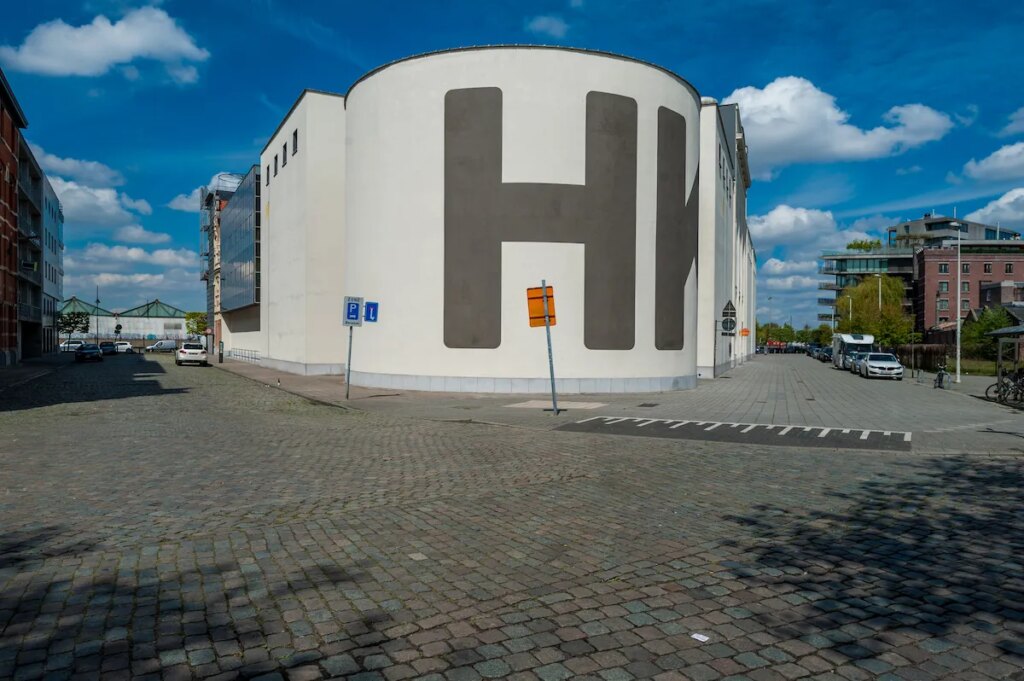
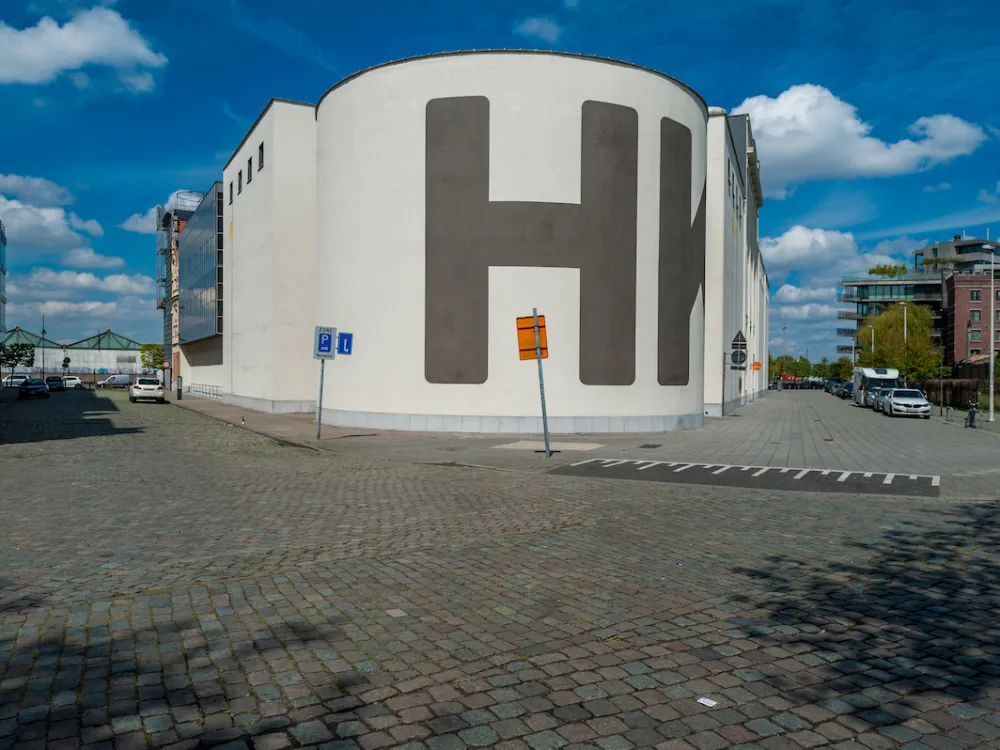
The government of Belgium’s Flanders region has backpedaled on its plan to close down the M HKA in Antwerp and convert it into a new cultural center, temporarily ending a months-long controversy over what would become of one of Europe’s most beloved contemporary art museums.
As part of a new plan for the institution that Flemish culture minister Caroline Gennez dubbed “M HKA 2.0,” the museum’s collection will now remain in Antwerp, meaning that the holdings will no longer be relocated to the SMAK museum in Ghent, as she previously stated. Moreover, M HKA can retain its status as a museum, enabling the museum to continue mounting programming.
Related Articles
M HKA Fires Back at Flemish Government, Denouncing Plan to Close Museum as Illegal
Museum Organizations Express Concern Over Flemish Government’s Decision to Nix Belgium’s Oldest Contemporary Art Museum
Under this new plan, M HKA “will thus constitute much more than today a bridge between heritage and the artistic field,” Gennez said.
Gennez did, however, tease one change for the Flemish culture scene. She said she wanted to form what she called a General Assembly that would convene artists and other members of the region’s artistic scene, in an effort to spur on collaboration. She also said that SMAK will now be operated by the regional government, as was originally intended under her vision to remake the region’s museum landscape, according to RTBF, a Belgian broadcaster.
Her original plan to shutter M HKA drew condemnation, both within Flanders and beyond. Prominent artists based in Belgium, including Luc Tuymans and Otobong Nkanga, mounted passionate pleas to save the institution, and protests were held at the museum regularly. M HKA also asserted that Gennez’s plan was illegal, bringing on lawyers to make its case.
Rather than issuing a statement about Gennez’s turnabout, M HKA instead sent out its 2026 program to the English-speaking press. This year, the museum will mount versions of traveling surveys for artists such as Lee Bul and Nicola L., as well as the group show “we refuse_d,” which contends with censorship and which recently appeared at the Mathaf: Arab Museum of Modern Art in Doha, Qatar.
The museum will also mount several rotating presentations of its permanent collection during 2026, all of which will be free to the public. The collection, which has long made a case of Antwerp’s central role in the history of the 20th-century avant-garde, will be treated “as an evolving field of inquiry”—seemingly a victory lap for the institution whose collection was at risk of being transferred out of Antwerp.
Noting that M HKA will celebrate its 40th anniversary in 2027, artistic director Nav Haq said that “our programme this year will be one that offers our communities a vital space for reflecting not only on the role of artists and cultural institutions in society, but also on what must be done to ensure the sustainability of their practices in the face of a turbulent political climate.”