

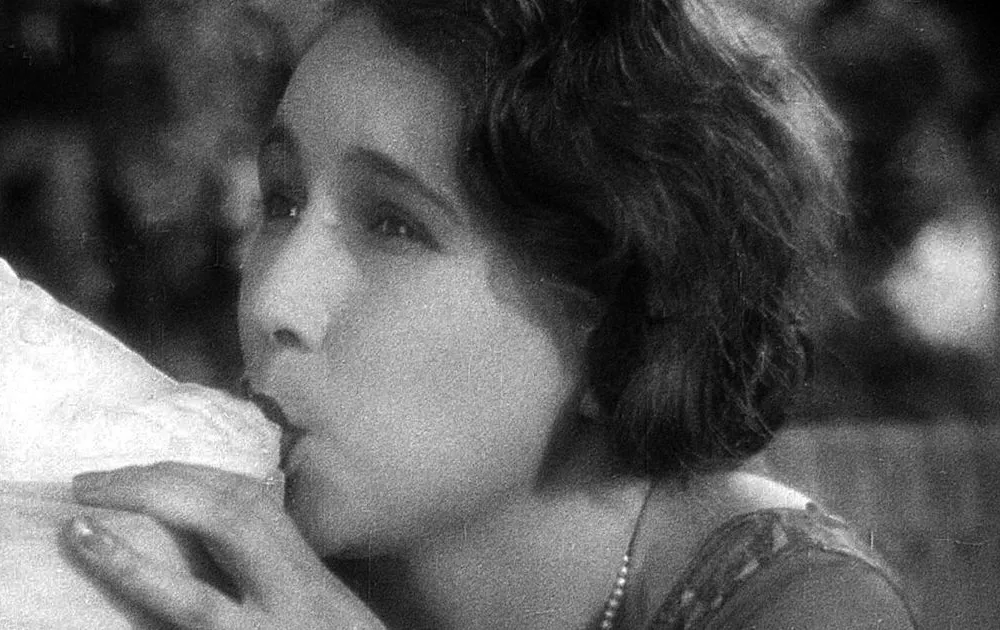
With each passing year, new artworks are shorn of their copyright protections and entered into the public domain, allowing them to be used freely, without express permission from the estates that steward these pieces. This year, pieces by Salvador Dalí, José Clemente Orozco, and others of note have officially joined the public domain.
There are some important exceptions about how these artworks can be used, however. In theory, in keeping with US copyright law, which states that a copyright lifts after 95 years unless it is renewed, any artwork produced in 1930 would now be rid of protections guiding it.
But as Duke University’s Center for the Study of the Public Domain notes every year on what it terms Public Domain Day, copyright is a notoriously finicky thing in this country, related both to when an artwork was made and when it was released to the public and whether an estate or guiding entity has renewed the legal rights to a given piece. (This year’s Duke list also applies to the artworks themselves, and not specific high-quality images of them, whose rights are often stewarded by organizations that work with artists’ estates.)
Still, all those caveats have not kept some major works in multiple fields from entering the public domain. William Faulkner’s groundbreaking 1930 novel As I Lay Dying joined the public domain this year, as did Sigmund Freud’s 1929 philosophical tract Civilization and Its Discontents and the 1930 Marx Brothers classic Animal Crackers. So too did a range of cartoon characters this year, including Betty Boop and Rover, the Disney dog who was later rechristened Pluto.
Below are six artworks that are entering the public domain this year, according to Duke’s list.
-
Piet Mondrian, Composition with Red, Blue and Yellow, 1930
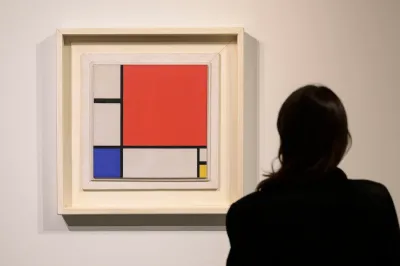
Image Credit: Angela Weiss/AFP via Getty Images Piet Mondrian left a lasting mark on modern art with works such as this one, which is divided into squarish segments of unbroken color separated by thick black lines. The Dutch painter aspired to reach a form of “pure plastic art,” one that allowed its viewers to reach states of transcendence. The work is owned by the Kunsthaus Zurich in Switzerland; a very similar second version of the painting sold at Sotheby’s in 2022 for $51 million and is imaged above.
-
Luis Buñuel and Salvador Dalí, L’Âge d’Or, 1930
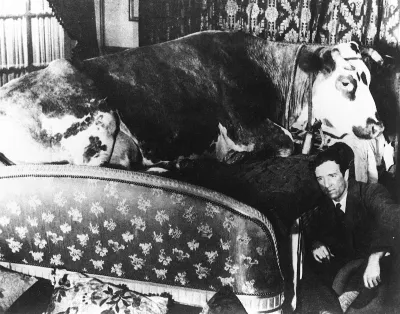
Image Credit: FilmPublicityArchive/United Archives via Getty Images An essential work of Surrealism, this film is considered a landmark, both because it was one of the first sound movies and because its erotically charged imagery generated controversy in its day. Much like Luis Buñuel and Salvador Dalí’s earlier collaborative effort, Un Chien Andalou (1929), also in the public domain, L’Âge d’Or lacks a cohesive narrative and is instead more notable for the beguiling imagery it offers. One famed sequence features a woman fellating the toes of a statue.
-
José Clemente Orozco, Prometheus, 1930
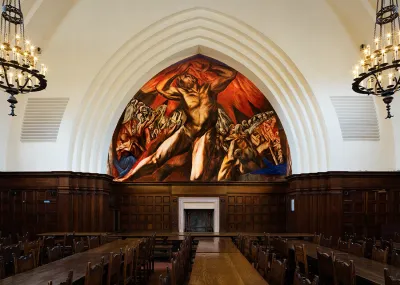
Image Credit: Image ©Pomona College José Clemente Orozco had already cultivated a reputation as one of the most important muralists in Mexico by the time he painted Prometheus, his first fresco produced for a venue in the United States. Housed in a dining hall at Pomona College in Claremont, California, the painting depicts Prometheus, the ancient Greek god who ran contrary to Zeus’s wishes by providing humanity with fire. Orozco painted this nude without genitalia for fearing of offending some viewers.
-
Sophie Taeuber-Arp, Composition, 1930
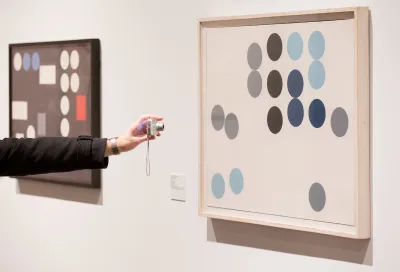
Image Credit: Friso Gentsch/picture alliance via Getty Images Until a few years ago, when a traveling retrospective did much to reshape the public perception of her art, Sophie Taeuber-Arp was a lesser-known modernist. Now, the Swiss artist is beloved for the ways she translated her experiments with abstraction across multiple mediums, from paintings to textiles to clothes. Composition, a work owned by the Museum of Modern Art in New York, demonstrates her willingness to move beyond tradition, with oil paint used alongside metallic flakes that cause the work’s surface to sparkle.
-
Photography by Edward Steichen
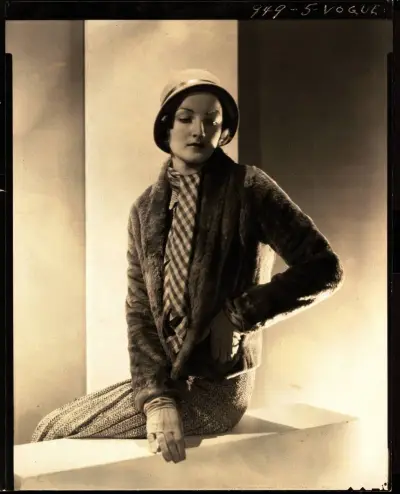
Image Credit: Conde Nast via Getty Images Edward Steichen blazed a new trail for many fashion photographers after him with his pictures for Vogue. He became the chief photographer of that magazine and Vanity Fair in 1923, and in the years afterward, he defined a new paradigm by embracing artificial lighting and stagy art direction that caused these shoots to look quite unlike life itself. Certain pictures shot for Vogue in 1930 are now in the public domain.
-
Paul Klee, Tier Freund Schaft (Animal Friendship), 1930
Image Credit: Getty Images Many of Paul Klee’s paintings involve mysterious symbols that hint at worlds beyond our own. This painting, owned by the Museo Reina Sofía in Madrid, features a duckbilled creature and a bison-like animal interacting against a brushy backdrop.