
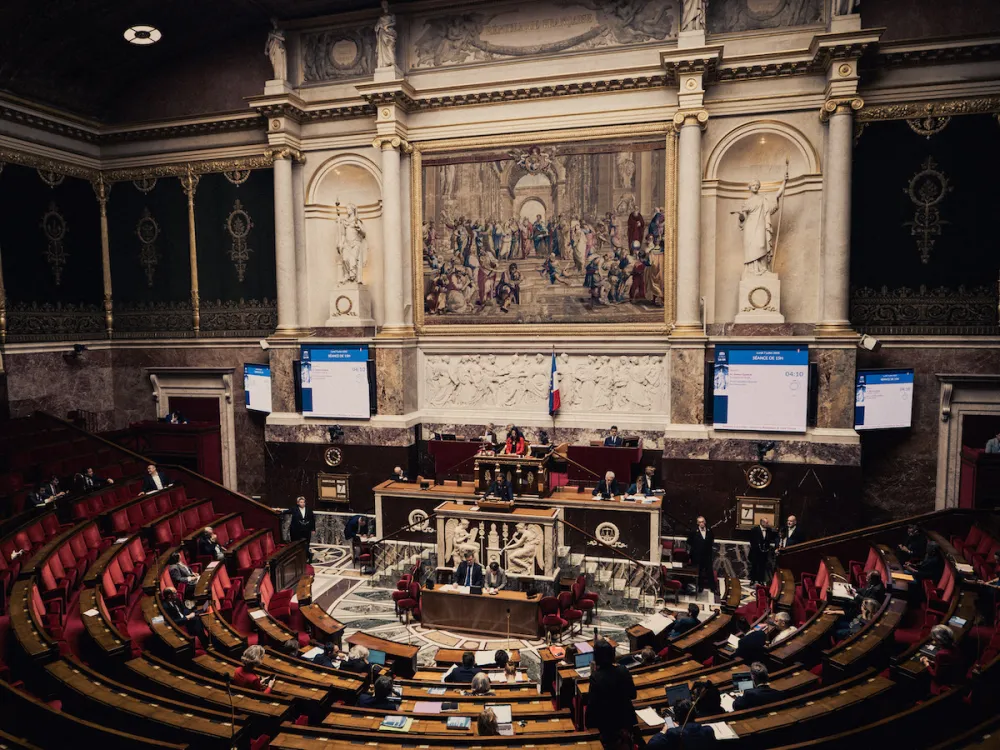
In what was described as “a decisive step in the long road to the restitution of property looted in Africa during the colonial era,” on Wednesday the French National Assembly’s Cultural Affairs Committee approved a proposed bill that was unanimously passed by the Senate’s Cultural Affairs Committee in January, setting up a plenary session debate on April 13.
As reported by Le Monde, Bénédicte Savoy, the historian who co-authored a momentous restitution report with Senegalese economist Felwine Sarr in 2018, said, “I am truly very moved. This shows that we can let go, that we are not clinging to collections accumulated through violence; it is a sign of collective maturity. It is the culmination of a great movement.”
Related Articles

11-Year Restitution Dispute Over Prized Modigliani Ends With Loss for Nahmad Family
Germany Creates New Council to Oversee Returns of Looted Art
That report followed a pledge by French president Emmanuel Macron in 2017 to introduce restitution policy within five years. Though the timeline extended, the new bill, according to Le Monde, “stipulates that restitution can be ordered by decree of the Minister of Culture”—a significant change from a status in which “each restitution was subject to specific legislation.”
Similar to a previously proposed bill that failed to pass, the new policy “carefully avoids mentioning the colonial context—merely stating that its application covers the period from 1815 until 1972, the date of entry into force of the UNESCO Convention on the Restitution of Cultural Property.” Catherine Pégard, France’s Minister of Culture, described the policy as ”a law of responsibility and truth, a law that is neither in denial nor in repentance.”
Among the many issues that have challenged the passing of a restitution bill is the language used to characterize its rationale and the nature of its implementation. As Le Monde writes, “While no group has voiced outright opposition to the law, the plenary session on April 13 could generate some friction.”
Alexandre Portier, chair of the National Assembly’s Cultural Affairs Committee, acknowledged, “It’s clear that two opposing views of history are clashing in the National Assembly, the challenge being to avoid both repentance and amnesia.” But he remains confident that the bill will pass: “We found a compromise that allows everyone to reclaim their history by depoliticizing it. This law is a valuable tool for cultural diplomacy with African countries.”
Read More About:
- restitution